

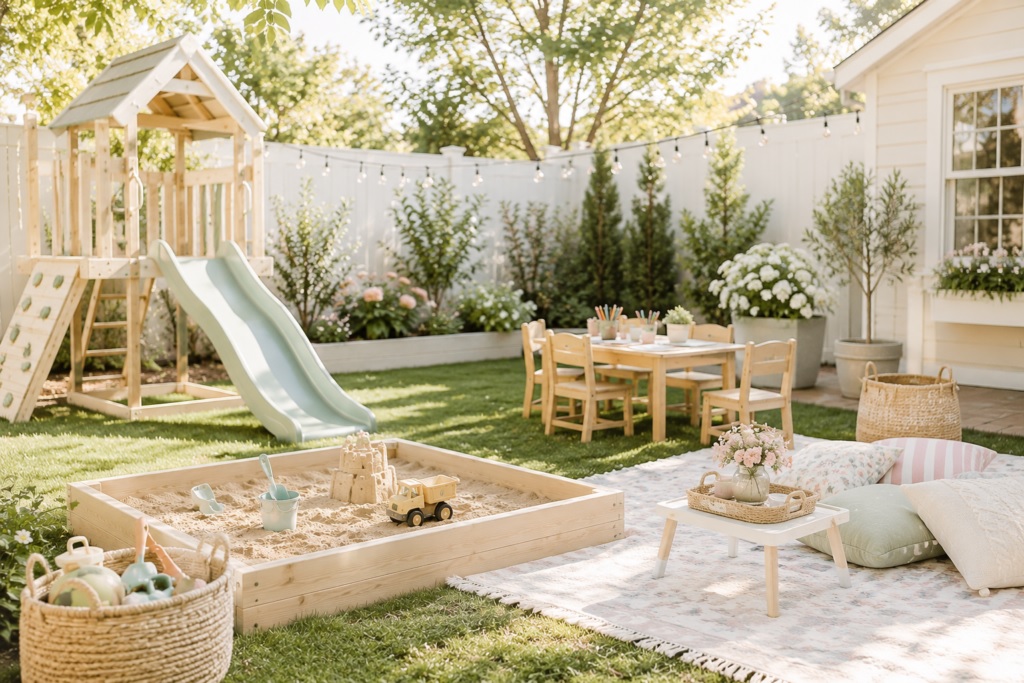
A backyard gives children something that a tightly scheduled activity cannot always provide: room to decide what happens next. A few cushions become a campsite, a table becomes a café, and a shady corner turns into a place for an important meeting. The setting is familiar, but the story changes every time.
A dedicated little space can make those ideas easier to return to. Cubbies are one option for families who want to give children a place they can make their own. They can be part of a larger active play area, yet still offer somewhere to pause, talk and invent a game.
Children bring the story
Adults sometimes feel they need to furnish a play space with every possible prop. Children often need much less. A small table might be a shop counter in the morning and a spaceship control panel after lunch. Leaving parts of the space open allows them to change the story without asking for new equipment.
Watch what children already pretend to do. If they gather leaves and stones to make a café, they may enjoy a small shelf or washable container for their “ingredients”. If they make dens from blankets, they may want a place that feels enclosed. Their existing games are useful clues when deciding how to arrange the backyard.
A space of their own can encourage return visits
Children may come back to a familiar play area because they left a story unfinished. Yesterday’s shop can reopen, a new visitor can arrive at the pretend house, or a fort can be given a different name. This continuity makes ordinary afternoons feel connected.
The space does not need to be large or elaborate. What matters is that children can recognise it as a place where play is welcome. Keeping a few suitable items within reach can help them begin independently. Adults should still supervise as appropriate, but they do not have to direct every minute of the game.
Imaginative and active play can sit together
Pretend play is not always quiet. Children may climb aboard an imaginary ship, dash between “shops” or carry supplies across the yard. A cubby near a suitable open area can support that movement, allowing a story to grow beyond one structure.
When planning the layout, consider how children will travel between features. Avoid placing loose toys where they interfere with a slide or another active area. Leave enough clear space to move and follow the equipment’s installation guidance. A good arrangement lets children change pace without turning every route into an obstacle.
Think about siblings and friends
A shared play space can encourage cooperation, but it may also lead to disagreements over who decides the rules. That is a normal part of playing together. Give children a chance to negotiate simple roles, and step in when someone is being excluded or the game becomes unsafe.
It can help to have more than one way to participate. One child may want to be inside the cubby while another serves customers through a window or delivers pretend parcels from the garden. The game becomes more flexible when everyone does not need to occupy the same small space at once.
Let the setting change with the seasons
Outdoor play feels different throughout the year. In warm weather, shade and drinking water are important. After rain, check the ground and surfaces before children use the area. A play space that is easy to clean and inspect will be easier to include in everyday life.
You can also change small details without remaking the entire backyard. A chalk sign, a removable fabric decoration or a box of different pretend-play objects can give children a fresh idea. Keep materials suitable for outdoor use and store them when needed. Temporary changes often provide plenty of novelty.
Choose a practical position
A cubby may look charming tucked into the farthest corner, but consider whether children can reach it easily and whether adults can supervise. Check shade, drainage and the view from the house. Leave space around the structure for inspection and maintenance.
Think about where its entrances and any connected play features face. Children should not have to cross directly through another activity to get in and out. Read the dimensions and installation instructions for the particular model. A well-chosen position makes the structure feel like a natural part of the yard rather than something squeezed into leftover space.
Avoid directing every game
It is tempting to suggest a story whenever play slows down. Sometimes children need a little unfilled time before an idea emerges. You can offer a simple starting point, such as “What could this place be today?”, then let them decide.
Follow their lead when they invite you to join. If the cubby is a bakery, ask what is on the menu. If it is a research station, find out what they are studying. Taking their ideas seriously does not require a long performance from you. A few minutes of interested participation can help a game continue after you step away.
Make room for quiet moments
A child may use the same space to talk with a friend, look at a book or sit alone for a little while. That is as worthwhile as an elaborate pretend adventure. Outdoor play does not have to be constantly energetic to hold a child’s attention.
Give them a comfortable, appropriate place to pause, while maintaining the level of supervision they need. A backyard with room for both stories and rest is likely to remain useful as children grow. Imaginative play thrives when the setting is inviting and children are free to decide what it becomes.